
Recticel on working with circular material flows
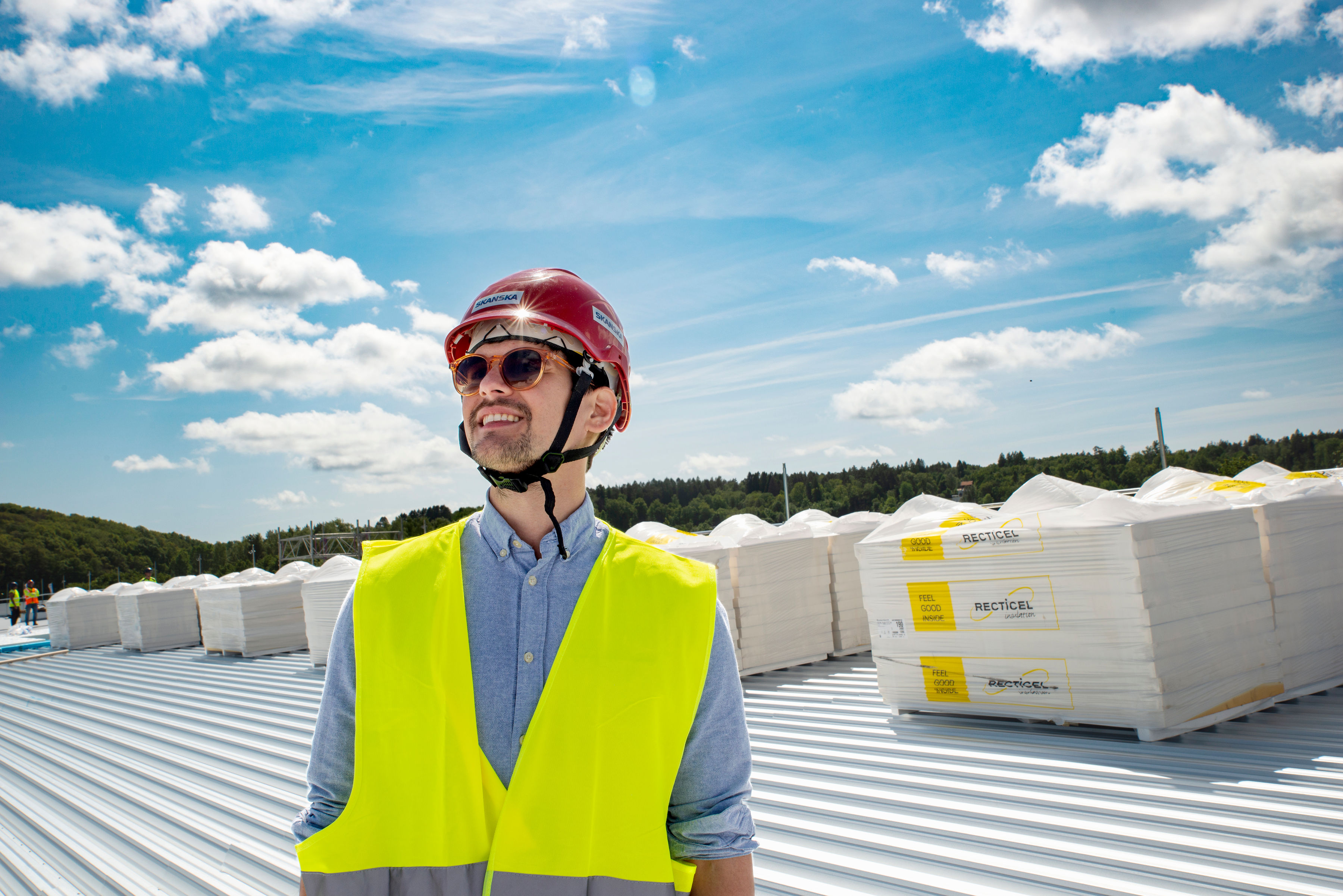
Tell us about yourself and your role at Recticel
I work as a Technical Manager at Recticel Insulation in Sweden. In my role, I am involved in a wide range of technical project support and project management activities. This includes everything from planning fire tests, moisture dimensioning and energy performance, to various construction solutions – both in new builds and renovation projects aimed at improving a building’s energy performance.
In recent years, sustainability-related aspects have become an increasingly important part of my work, particularly in relation to circularity and how we can reduce climate impact without compromising performance or quality.
What is the new recycling facility and how does it work?
The new facility in Belgium recycles PIR production waste and converts it back into recycled polyol, which is then used in the production of new PIR insulation boards.
This enables us to take production waste from our own factories and feed the material back into production, instead of relying solely on virgin raw materials. The facility has the capacity to recycle up to 4,000 tonnes of PIR waste per year.
This results in a clear reduction in CO₂ emissions, while maintaining the same technical performance of the products. Up to one third of conventional polyol can be replaced with recycled material, which also increases raw material flexibility and reduces dependency on external raw material flows.
How does Recticel work with BASTA?
BASTA is important to us, as the construction industry is placing increasing demands on transparency and documentation of materials. We actively work to ensure that our products have clear and up-to-date environmental information, enabling designers and clients to make informed decisions in their projects.
At the same time, we see that sustainability today goes beyond energy performance. It also includes material content, resource efficiency, and how products fit into more circular construction processes. Systems like BASTA therefore provide valuable support, both for us and for our customers—particularly as we continue to work with recycled raw materials and long-term development.