What is Omnibus?
Omnibus is the European Commission's initiative to simplify several of the EU's sustainability regulations. The package was presented on 26 February 2025 and aims to reduce the administrative burden on companies while maintaining the EU's overall climate and sustainability objectives.

The Omnibus package primarily affects the following regulatory frameworks:
- CSRD (Corporate Sustainability Reporting Directive, Directive (EU) 2022/2464)
- CSDDD (Corporate Sustainability Due Diligence Directive, Directive (EU) 2024/1760)
- EU Taxonomy (Regulation (EU) 2020/852)
- CBAM (Carbon Border Adjustment Mechanism, Regulation (EU) 2023/956)
These regulations must be implemented into national legislation by EU Member States no later than 19 March 2027.
Why Was Omnibus Introduced?
In recent years, many companies, industry associations and Member States have expressed concerns that the volume of sustainability reporting has become very extensive. Small and medium-sized enterprises (SMEs) in particular have experienced increased costs and administrative burdens when collecting data, reporting information and responding to information requests from customers and investors.
The European Commission therefore concluded that certain parts of the regulatory frameworks needed to be simplified in order to strengthen Europe's competitiveness. The objective is to reduce administrative costs by at least 25 percent for companies in general and 35 percent for small and medium-sized enterprises (SMEs).
What Does Omnibus Mean for CSRD?
The most widely discussed aspect of Omnibus concerns sustainability reporting under CSRD. The Commission proposed that only larger companies should be subject to the full reporting requirements.
The Omnibus Directive means that sustainability reporting will not be required for companies with fewer than 1,000 employees (the previous threshold was 250 employees). In addition, reporting requirements for many companies have been proposed to be postponed, giving organisations more time to prepare.
Simplification of the ESRS Standards
Omnibus also means that the European Sustainability Reporting Standards (ESRS) will be reviewed and simplified. The objective is to reduce the number of disclosure requirements and data points that companies need to report. According to several analyses and proposals from EFRAG (European Financial Reporting Advisory Group), the number of mandatory reporting requirements could be significantly reduced compared with the current standards.
For the construction industry, this may mean that sustainability reporting becomes more focused on the most material issues, such as climate impact, resource use, chemicals and impacts within the value chain.
What Happens to the EU Taxonomy?
Omnibus also includes extensive simplifications of the EU Taxonomy. Some important changes are:
- Limited reporting obligations from suppliers to the very largest companies in the value chain.
- Introduction of materiality thresholds, whereby less significant activities do not need to be analysed.
- Significantly simplified reporting templates.
- Simplified criteria for certain DNSH ("Do No Significant Harm") requirements.
One example mentioned in the EU's work is that companies should be able to focus on value-creating activities instead of administration.
What Does Omnibus Mean for CSDDD?
The rules on corporate responsibility in the value chain, CSDDD, are also proposed to be simplified. The changes include, among other things:
- Fewer requirements for ongoing reviews of supply chains.
- Reduced administrative burden in risk assessments.
- Greater focus on the most significant risks in the value chain.
The idea is that companies should be able to work with due diligence in a more risk-based and proportionate way.
For the construction sector, Omnibus is particularly interesting because many companies are affected by several EU regulations at the same time: CSRD, the EU Taxonomy, CPR, ESPR, chemicals legislation and Digital Product Passports.
Omnibus does not change the overall sustainability objectives, but it reduces the amount of mandatory reporting and documentation. Companies will still need to work with climate impact, circularity, chemical content and traceability, but reporting is intended to become more proportionate and focused on the largest actors.
For organisations that work with BASTA, eBVDs, EPDs and future Digital Product Passports, Omnibus does not mean that sustainability work disappears. On the contrary, quality-assured product information will likely continue to be important, but the requirements regarding how information is reported and by whom may change.
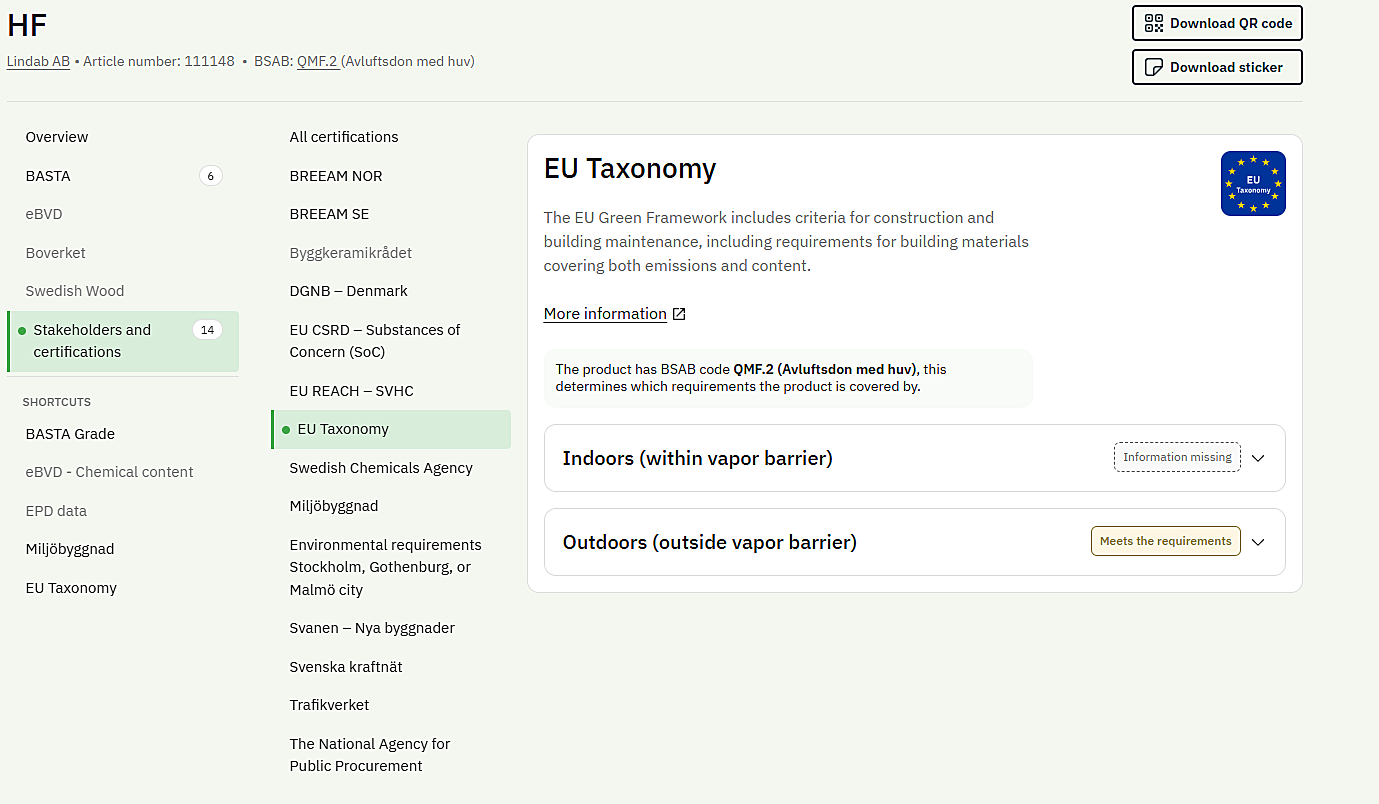
Read more about BASTA and CSRD, Substances of concern here: EU CSRD – Substances of concern (SoC) | BASTA
Read more about EU Taxonomy and BASTA here: EU Taxonomi | BASTA