What is ESRS?
ESRS is a set of standardized disclosure requirements for companies operating within the European Union and is closely linked to the Corporate Sustainability Reporting Directive (CSRD, Directive 2022/2464). ESRS stands for European Sustainability Reporting Standards.

The standards support the implementation of CSRD by establishing specific reporting requirements and disclosure points, with the aim of standardizing how companies report sustainability-related information. In other words, while CSRD defines the legal requirement for sustainability reporting, ESRS specifies what information must be reported and how it should be disclosed. Put simply, ESRS is the framework through which CSRD reporting is carried out.
The ESRS framework consists of a total of 12 standards covering environmental, social, and governance topics. It includes two cross-cutting standards and ten topical standards addressing specific sustainability issues across these three areas.
ESRS E2 Pollution is one of the environmental topical standards. It includes requirements related to Substances of Very High Concern (SVHC) and provides information and definitions for Substances of Concern (SoC).
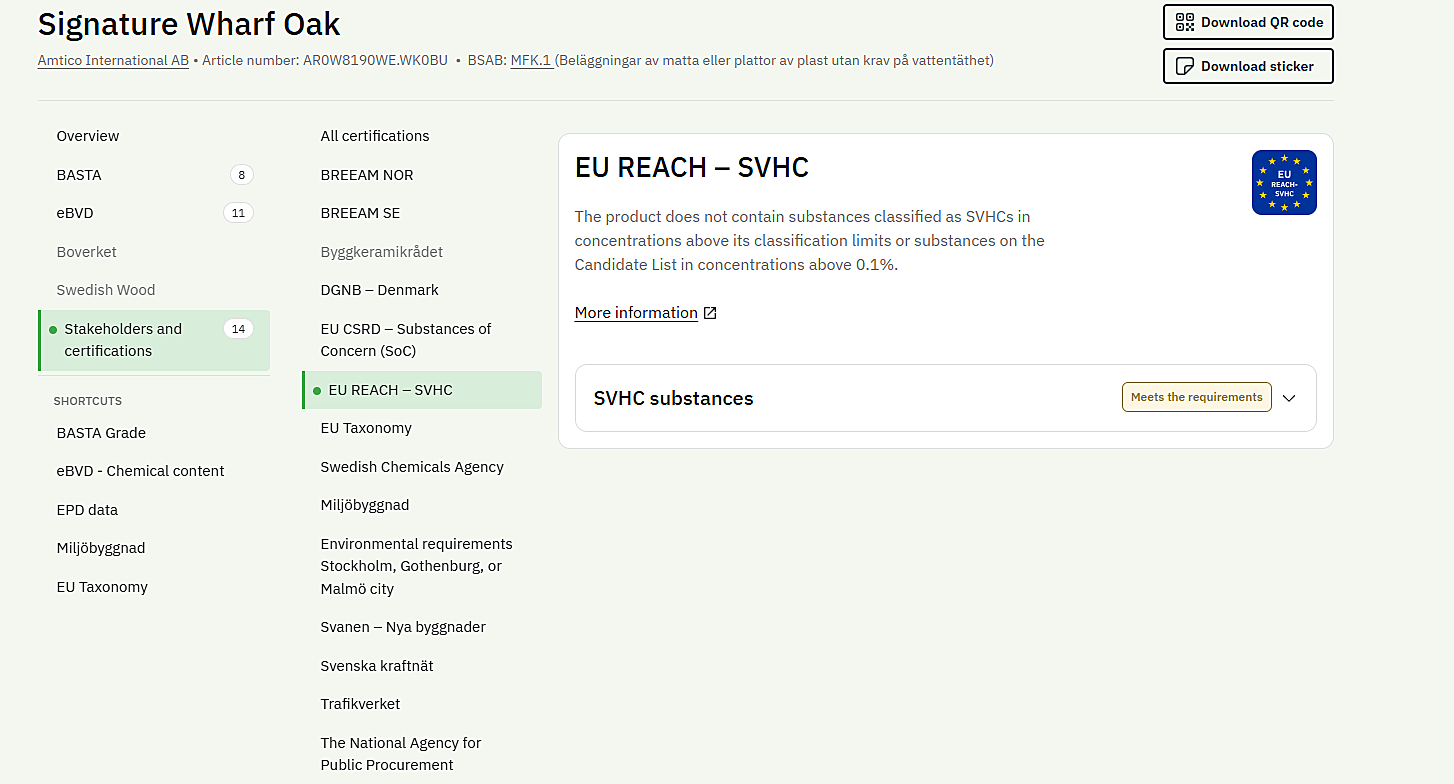
Within the BASTA system, it is possible to identify whether a product contains SVHC and/or SoC substances (as defined in Commission Delegated Regulation (EU) 2023/2772 (ESRS)) above the relevant concentration thresholds. However, the system does not provide information on the total weight of these substances within a product.
To view information about a specific product, search for it in our public search engine, BASTA Search, open the product page, and review its data and compliance information.
For an example of compliance with SVHC-related requirements, see: Amtico International AB | Signature Wharf Oak | Product | BASTA.